The Three Business Days of Main Character Delusion
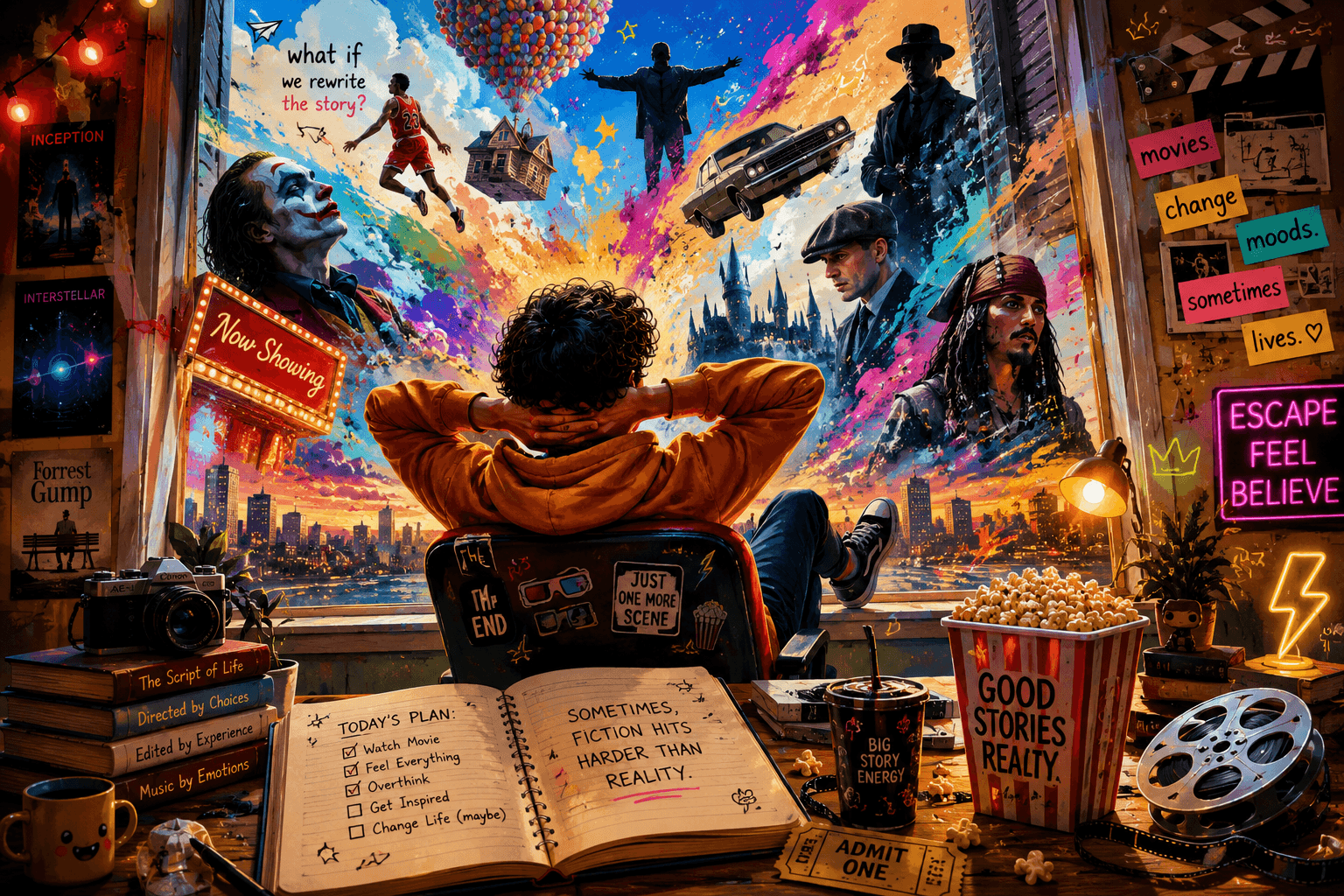
The Three Business Days of Main Character Delusion
There's a strange period of time after watching certain movies where reality feels slightly edited.
Some movies end when the credits roll.
Others follow people home.
Streetlights look more cinematic. Conversations feel more meaningful. Even ordinary walks start carrying imaginary background music.
For some people, the feeling disappears before they get home, they move on completely unaffected.
For others, the movie quietly settles into their personality for the next few days.
That's the fascinating thing about cinema: people don't just watch stories. Sometimes they absorb them.
The "I Relate to This Character" Phenomenon
Some people don't simply watch characters. They emotionally adopt them.
The struggling underdog?
"That's literally me."
The misunderstood genius?
"Finally, someone gets it."
The emotionally distant anti-hero with a tragic backstory and excellent fashion sense?
"Wow... he's so deep."
People naturally connect to characters because movies often mirror emotions we already carry in real life. Loneliness, ambition, heartbreak, insecurity, revenge, hope -- cinema packages all of it into dramatic scenes and unforgettable dialogues.
And when someone feels seen by a character, the connection becomes personal.
That's why people defend fictional characters online like they're family members. Somewhere between the background music and emotional monologue, the brain quietly decides:
"Yes. This fictional person understands me better than my relatives."
When Movies Become More Than Movies
For some people, films become motivation.
A sports movie makes them want to work harder.
A business movie makes them dream bigger.
A survival movie suddenly convinces them they too could survive in the wild despite struggling to keep a plant alive.
Movies can genuinely influence mindset in positive ways. They inspire confidence, ambition, creativity, and even empathy. A powerful story can change how someone sees life.
But sometimes people don't stop at inspiration.
Sometimes they start downloading the entire personality.
You watch one gangster movie and suddenly everyone is posting black-and-white photos with mysterious captions like:
"Respect is earned."
Sir, you work in accounting.
Cinema has a funny way of making ordinary things feel legendary. A slow walk becomes power. Silence becomes mystery. Wearing sunglasses indoors somehow becomes a personality trait.
And honestly, it's hilarious how easily humans absorb vibes from fiction.
The People Who Stay Completely Normal
Then comes the other category of viewers.
These people watch the saddest movie ever created and react with:
"Good film."
That's it. No emotional collapse. No overthinking. No existential crisis while listening to sad songs at midnight.
These are the people who can separate fiction from reality with Olympic-level discipline.
They enjoy movies as entertainment and leave them at the screen. No obsession. No personality transformation. No pretending life suddenly has cinematic background music.
Meanwhile, someone else is rewatching edits of the villain on YouTube and questioning society.
The contrast is honestly beautiful.
Why Do People Get So Attached?
Because humans love stories.
We always have.
Long before social media and streaming platforms, people connected through storytelling. Movies simply became the modern version of that emotional connection.
Sometimes a character represents the person we are.
Sometimes the person we wish we were.
And sometimes just the confidence level we want while entering a room.
Movies also give people temporary escape. Real life is stressful, repetitive, and filled with passwords we can never remember. Films offer a world where emotions are dramatic, problems have background music, and everything somehow looks aesthetically pleasing during rain scenes.
For a few hours, people feel bigger emotions than everyday life usually allows.
That emotional intensity stays with them.
The Fine Line Between Inspiration and Obsession
Being inspired by movies is fun.
That's part of the magic of cinema.
The problem starts when people stop appreciating stories and start replacing reality with them. Real life rarely works like films. There's no background soundtrack during arguments. Nobody delivers perfect speeches in real-time. And dramatic exits usually just look awkward if the automatic door doesn't open fast enough.
Movies are designed to exaggerate emotions because that's what makes storytelling exciting.
Reality is quieter.
And honestly, that's okay.
You can admire a character without becoming them.
You can love a movie without building your entire personality around it.
And you can enjoy fictional confidence without suddenly behaving like a retired mafia boss in a coffee shop.
Balance is the real skill.
The Funniest Part? Both Are Right.
Movies are supposed to make people feel something. That's the whole point.
Some watch for entertainment.
Some watch for comfort.
Some search for meaning.
And some just want an excuse to buy a leather jacket after watching one action film.
Cinema affects everyone differently because mindset affects how stories are absorbed.
The movie may last only three hours.
But for some people, the emotional impact stays for years.
And maybe that's the beauty of it.
A screen shows the same story to everyone,
yet every mind watches a different movie.